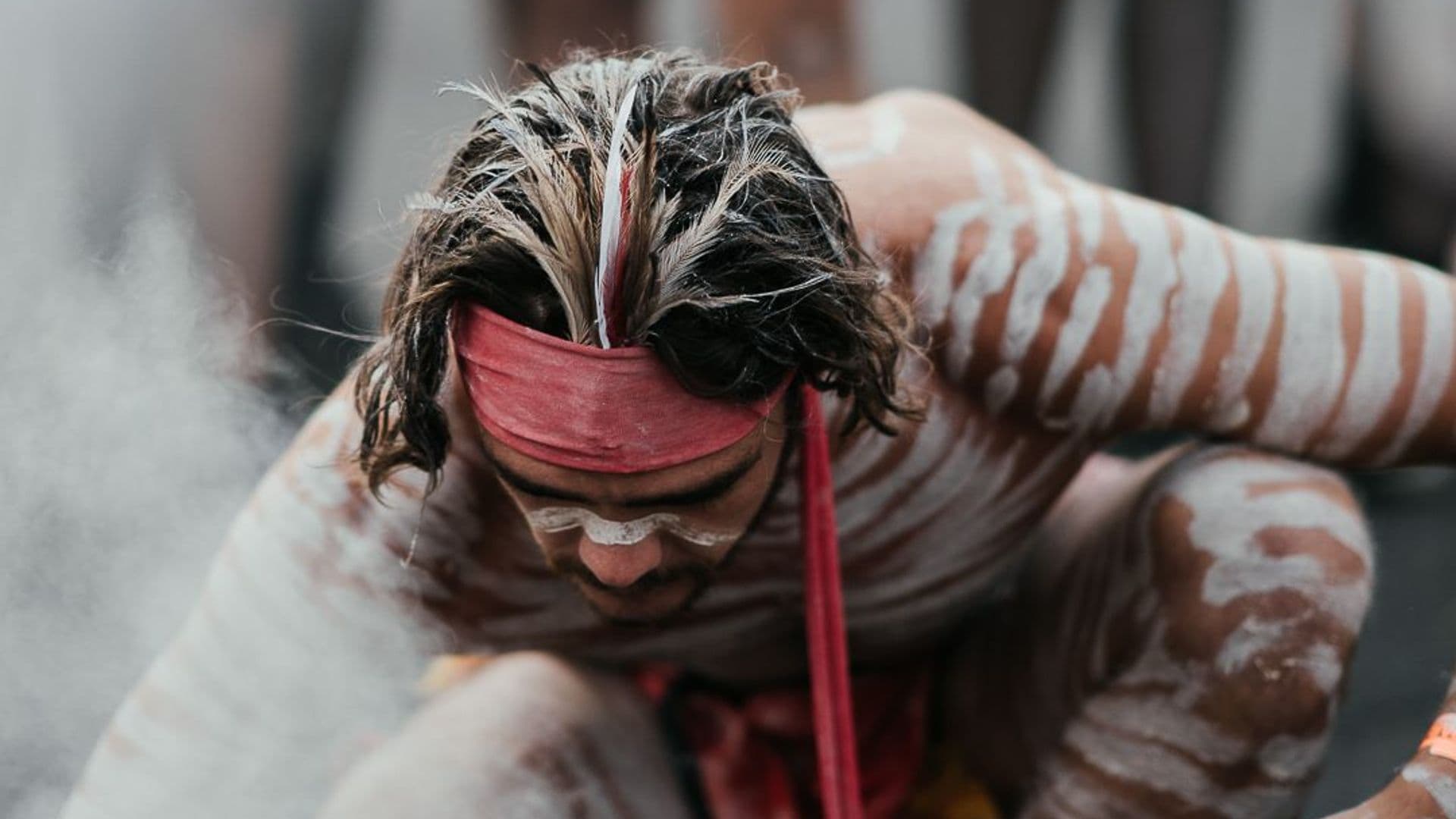
North Stradbroke Island has been Minjerribah for over 20,000 years — home to the Quandamooka people, whose living culture shapes every part of this island. Here is what visitors should know about its heritage, and how to engage with it respectfully.
Before it was ever called North Stradbroke Island, this place was Minjerribah. It has been Minjerribah for more than 20,000 years — home to the Quandamooka people, who have lived on, cared for, and shaped this land and its surrounding waters since long before European contact.
That history is not a relic. It is not confined to museum displays or interpretive signs. The Quandamooka people are here, their culture is alive, and the island you visit today exists in the form it does because of millennia of careful stewardship.
Understanding this heritage does not require a background in anthropology. It requires attention, respect, and a willingness to see the island as more than a collection of beaches. This guide shares what we think every visitor should know.
The Quandamooka people are the Traditional Owners of Minjerribah and the wider Moreton Bay region, including its islands, waterways, and marine environments. The name Quandamooka refers to the people of the bay — reflecting a culture that has always understood land and sea as inseparable.
The Quandamooka nation comprises three clan groups: the Nunukul, the Goenpul, and the Ngugi. Each has distinct connections to different parts of the region, but all share a deep responsibility for Country — a term that in Aboriginal culture encompasses not just land, but water, sky, plants, animals, seasons, stories, and the relationships between all of these.
In 2011, the Quandamooka people achieved Native Title over much of North Stradbroke Island and the surrounding sea Country — a legal recognition of what they had always known. This was a landmark moment, and it shapes how the island is managed today. The Quandamooka Yoolooburrabee Aboriginal Corporation (QYAC) plays an active role in land management, conservation, and cultural preservation across the island.

One of the most important things to understand about Quandamooka culture is that it is not past tense. This is not a story about people who used to live here. The Quandamooka community is vibrant, present, and actively shaping the island’s future.
Elders pass knowledge to younger generations through storytelling, ceremony, art, and daily practice. Traditional ecological knowledge — understanding of seasons, animal behaviour, plant uses, and land management — continues to inform how the island’s environment is cared for.
Minjerribah is crossed by songlines — paths across the landscape that carry stories, law, and spiritual meaning. These are not walking trails in the recreational sense. They are living cultural maps that connect places, people, and knowledge across vast distances. Some songlines extend from Minjerribah across Moreton Bay and into the mainland.
The island also holds sacred sites — places of ceremony, burial, and deep cultural significance. Not all of these are publicly identified, and that is deliberate. Some knowledge is restricted, shared only within certain family groups or during specific ceremonies. As a visitor, the most respectful thing you can do is stay on marked paths, avoid disturbing any archaeological sites, and understand that the island holds layers of meaning that are not always visible.
Long before European concepts of conservation existed, the Quandamooka people practised sophisticated land management. Fire-stick farming — the deliberate, controlled use of fire to manage vegetation, encourage new growth, and maintain habitat diversity — shaped the island’s landscape for thousands of years.
This practice is now recognised by contemporary land managers as ecologically valuable. Controlled burns reduce fuel loads that cause catastrophic bushfires, promote biodiversity, and maintain the mosaic of habitats that supports the island’s wildlife. When you see kangaroos grazing on the headlands at Point Lookout or koalas in the eucalyptus forests, you are seeing an ecosystem that was actively managed long before it was ever called a national park.
Jandai is the traditional language of Minjerribah. Like many Aboriginal languages, it experienced significant disruption through colonisation, but revitalisation efforts are underway. Place names are one of the most visible expressions of language on the island — Minjerribah itself, Dunwich (Goompi), and Amity Point (Pulan) all carry Jandai names that describe the landscape and its cultural meaning.
Using these names when you visit is a small but meaningful gesture. It acknowledges that the places you are enjoying have been named and known for far longer than any English map has existed.

Each September, the Quandamooka Festival brings together art, music, dance, storytelling, and cultural workshops in a celebration of living culture. It is one of the most significant Aboriginal cultural events in South East Queensland, and it takes place right here on Minjerribah.
The festival is open to everyone. Events range from traditional dance performances and smoking ceremonies to art exhibitions, guided cultural walks, and workshops where visitors can learn about weaving, language, and bush tucker. It is an opportunity to engage with Quandamooka culture directly, in a context where that engagement is welcomed and facilitated.
If your trip to Brisbane happens to coincide with the festival, it is worth building your itinerary around it. The experience is unlike anything else in the region.
Cultural storytelling is not an add-on to our tours. It is woven through the entire day.
When we stand at Point Lookout and watch for whales, we share the Quandamooka understanding of these waters and the marine creatures that travel through them. When we walk through forest, we talk about fire-stick farming and what the landscape looked like before and after European settlement. When we visit Amity Point, we explain its significance as a gathering place and its Jandai name, Pulan.
We do this because we believe that understanding where you are makes the experience richer. A headland is beautiful. A headland that you know has been a ceremonial gathering point for thousands of years is something else entirely.
We also do this with care. We share what is appropriate to share — stories and knowledge that the Quandamooka community has given permission to be told. We do not claim to speak for the Quandamooka people. We share what we have been trusted to share, and we encourage guests who want deeper engagement to seek out Quandamooka-led experiences directly.
Respectful tourism is not complicated. It comes down to a few simple practices:
The island’s traditional name carries cultural meaning. Using it — even alongside North Stradbroke Island — acknowledges the Quandamooka people’s enduring connection to this place. You will hear us use it throughout our tours.
This protects both the environment and cultural sites. Some areas of the island contain middens (ancient shell deposits), artefacts, and sacred sites that are not always signposted. Walking off-trail risks disturbing places of deep significance.
If you want to take something home from Minjerribah, choose authentic art and craft created by Quandamooka artists. This directly supports the community and ensures that the cultural expressions you are purchasing are genuine.
If you have the opportunity to hear from a Quandamooka Elder or community member, listen. These are stories that have been passed down through hundreds of generations. The depth of knowledge about this landscape — its plants, animals, tides, seasons, and weather patterns — is extraordinary.
Located in Dunwich (Goompi), the museum includes a dedicated section on Aboriginal history with artefacts, photographs, and oral histories. It provides important context for understanding the island’s pre-colonial and colonial history.
Beyond its spectacular ocean views, this headland has been a significant lookout and gathering place for the Quandamooka people. The elevated position provided views of approaching visitors, whale movements, and seasonal changes in the sea.
This freshwater lake holds cultural significance for the Quandamooka people. The tea-tree stained waters are surrounded by native forest, and the lake has been a place of gathering and sustenance for thousands of years.
The township of Dunwich sits on one of the island’s most historically significant locations. Archaeological evidence shows continuous Aboriginal occupation of this area for thousands of years. Today it serves as the ferry arrival point, but its cultural layers run far deeper than its current function suggests.
Most visitors come to Minjerribah for the beaches, the wildlife, and the escape from the city. Those things are wonderful, and they are reason enough to visit.
But the island offers something more if you are open to it. When you understand that the landscape you are walking through has been known, named, managed, and loved for over 20,000 years, every beach, headland, and forest path carries additional weight. The beauty does not diminish. It deepens.
That deeper understanding is what we try to share on every tour. Not as a lecture, but as a natural part of showing you a place we care about — a place that the Quandamooka people have cared about for far longer than anyone else.
Stradbroke Island Tours
Local guides sharing insider knowledge about North Stradbroke Island since 2020.
Book your eco-certified day tour from Brisbane to North Stradbroke Island.
Book Now