Thousands of humpback whales pass within sight of Point Lookout every year — close enough to hear them breathe. Here is a month-by-month guide to Straddie’s whale season, the best viewing spots, and what you will actually see.
Every year between June and November, thousands of humpback whales pass within sight of North Stradbroke Island’s coastline. They travel north to breed in the warm waters of the Coral Sea, then return south with their calves to feed in Antarctic waters.
What makes Straddie remarkable for whale watching is proximity. Point Lookout sits on a headland that juts into the migration corridor, putting you closer to the whales than almost any other land-based viewing location on Australia’s east coast. No boat required. No binoculars needed. On a good day, you can hear them breathe.
The migration follows a predictable pattern, but the experience changes throughout the season.
The northward migration begins. The first humpbacks start appearing off Point Lookout, usually travelling in small groups or solo. Sightings are less frequent than peak season but the whales are often curious and active, with breaching displays common. Water visibility tends to be excellent in the cooler months.
This is when the migration is at its most intense. Hundreds of whales pass Point Lookout each week, heading north to the breeding grounds. From the North Gorge headland, it is common to see multiple pods at once — blows, tail slaps, and breaches happening in every direction. These are the months when you are almost guaranteed sightings on any given day.
The return migration begins, and this is when the experience becomes truly special. Mothers travel south with their newborn calves, moving more slowly than the northward adults. The calves are curious and playful — learning to breach, rolling at the surface, and sometimes approaching remarkably close to the headland.
September and October are often considered the best months for whale watching on Straddie. The combination of close-range calf behaviour and reliable sightings makes these weeks exceptional.

The final stragglers of the southward migration pass through. Sightings become less frequent, but the whales that remain are often mothers with very young calves who rest in the sheltered waters near the island before continuing south. By late November, the season winds down.

This is the premier whale watching location on the island and one of the best land-based spots in Australia. The headland trail follows the cliff edge, providing elevated views across the ocean. The whales travel through the channel between Stradbroke and Moreton Island, often passing within a few hundred metres of where you are standing.
The walk itself is short — about 1.2 kilometres as a loop — with multiple viewing platforms and lookout points. During whale season, you can spend an hour here and see dozens of blows and surface behaviours. The platforms are accessible and have seating, making it comfortable to watch for extended periods.
Beyond the formal North Gorge Walk, the broader headland area around Point Lookout offers additional vantage points. The grassy areas near the surf club and along the cliff paths provide wide-angle views of the ocean. These spots tend to be less crowded than the North Gorge platforms during peak season.
While Cylinder Beach itself faces south into a sheltered bay, the rocky points at either end occasionally provide whale sightings when pods travel close to shore. It is not as reliable as North Gorge, but seeing a whale breach while you are sitting on the beach is an unforgettable surprise.
Whale watching is sometimes oversold with promises of guaranteed acrobatic displays. Here is an honest picture of what to expect.
Blows are the most common sighting — the misty spout of exhaled air as a whale surfaces to breathe. Once you learn to spot them, you will see blows across the horizon almost continuously during peak season. They are how you locate the whales before any surface behaviour happens.
Tail slaps and pectoral fin waves are regular occurrences. Whales slap their tails and fins against the water surface for communication, play, and to dislodge barnacles. From the North Gorge headland, you are close enough to hear the impact.
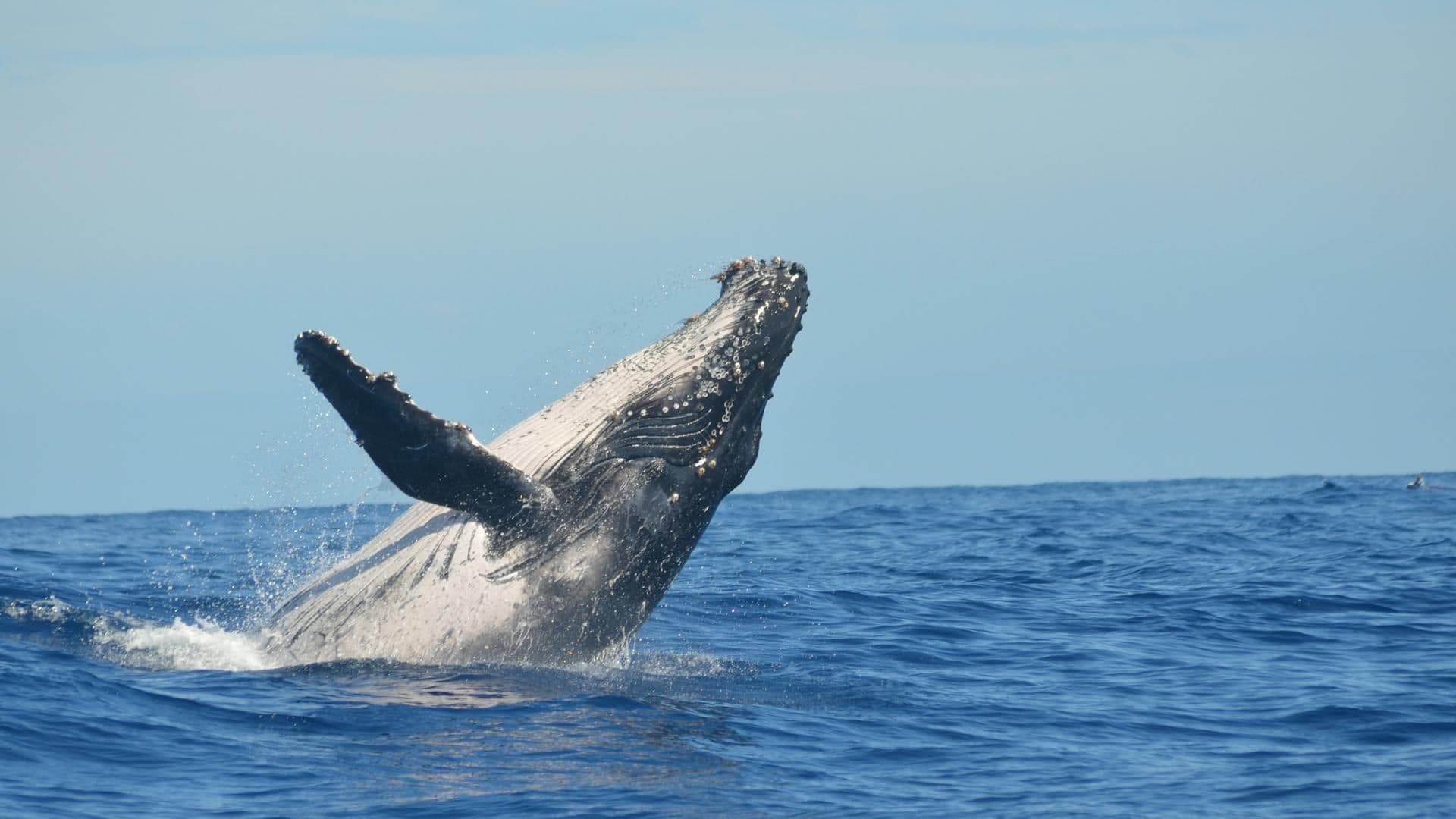
Breaching — the full-body leap out of the water — is the behaviour everyone hopes to see, and at Point Lookout it happens more often than you might expect. Calves breach frequently during September and October as they build strength and coordination. Adult breaches are less predictable but occur regularly throughout the season. On a good day, you might see dozens.
Mugging is the term for when a whale approaches very close to shore, sometimes hovering in the shallows for extended periods. This happens occasionally at Point Lookout and is extraordinary when it does — a 30-tonne animal floating in clear water just below the cliff where you are standing.
Most Australian whale watching experiences involve boat tours. Straddie is unusual because the land-based experience is genuinely better than what most boats can offer.
From the elevated headland at North Gorge, you have a panoramic view of the ocean. You can track multiple pods simultaneously, watch behaviours unfold from above, and spend as long as you want without worrying about sea sickness, boat schedules, or approach distance regulations that restrict how close vessels can get.
The whales at Point Lookout often pass closer to the headland than boats are legally permitted to approach. Because the cliffs are elevated, you are looking down at the whales rather than across the water at surface level, giving you a view of their full body shape and movement through the clear water.
There are no additional costs. No tickets to book. No weather-dependent cancellations. You simply walk to the headland and watch.

Whale season overlaps with some of Straddie’s other marine wildlife highlights.
Dolphins are present year-round but are particularly active during the cooler months. Bottlenose dolphins surf the waves at Point Lookout and are often seen from the same viewing spots where you watch for whales.
Sea turtles cruise through the clear waters below the headland. Green and loggerhead turtles are both present, and the water clarity during winter and spring makes them easier to spot from above.
Manta rays overlap briefly with early whale season. Their peak is December through May, but occasional sightings continue into June as the first whales arrive. Seeing both species in a single visit is rare but possible.
Seabirds including wedge-tailed shearwaters, sea eagles, and various terns are active around the headland, particularly when baitfish schools move through. The combination of whales, dolphins, turtles, and seabirds creates a marine spectacle that few places in Australia can match.
During whale season, our day tours from Brisbane include extended time at the North Gorge Walk and Point Lookout headland. We position our small group at the best viewing spots and adjust the schedule based on whale activity — if a pod is putting on a show, we stay longer.
With a maximum of 11 guests, everyone has a clear view from the platforms. Your guide helps you spot blows on the horizon, identifies different behaviours as they happen, and explains the migration — why the whales are here, where they are going, and what the different surface activities mean.
Whale watching is never the only part of the day. You will also explore beaches, visit freshwater lakes, see kangaroos and koalas, learn about Quandamooka culture, and enjoy lunch on the island. But during whale season, the whales often steal the show.
If you can choose your dates, September and October offer the best combination of frequent sightings and close-range calf behaviour. July and August deliver the highest volume of whales. June and November are quieter but still rewarding.
Binoculars are useful for tracking distant blows but not essential — the whales often come close enough for the naked eye. A camera with a zoom lens captures the moments well. Sunscreen and a hat are important even in winter, as you will be exposed on the headland. A light jacket is wise for the sea breeze.
Whale watching rewards patience. The temptation is to scan for a few minutes and move on, but the best sightings — breaches, mugging, calf play — happen when you settle in and wait. Even during peak season, there are quiet intervals between pods. Give it time.
Morning light at North Gorge is typically best for photography, with the sun behind you illuminating the ocean. Afternoon visits can produce dramatic backlit blows and silhouettes. Both are worthwhile, and on our tours we time the headland visit for optimal conditions.
Australia has many whale watching locations. Hervey Bay, Byron Bay, and Sydney’s headlands all attract visitors during migration season. What sets Straddie apart is the combination of proximity, elevation, frequency, and the fact that whale watching is just one part of a rich island experience.
You do not have to choose between whale watching and beach time, or between marine wildlife and land-based encounters. On Minjerribah, you get all of it in a single day — whales breaching off the headland, kangaroos grazing on the grass behind you, dolphins in the surf below, and 20,000 years of cultural heritage woven through every location you visit.
Stradbroke Island Tours
Local guides sharing insider knowledge about North Stradbroke Island since 2020.
Book your eco-certified day tour from Brisbane to North Stradbroke Island.
Book Now